
Network Infrastructure Solutions for Enterprise, Data Center, and Industrial IT/OT Environments
A company’s network infrastructure is no longer just a technical requirement in the background. It has become a core part of daily operations, business continuity, and digital connectivity. Today, every communication flow, system interaction, and data exchange depends on a strong and reliable network foundation.
At Camintek, we see network infrastructure as much more than a set of connected devices. It is the framework that enables organizations to operate efficiently, securely, and at scale. From engineering and design to the supply of active and passive equipment, installation, configuration, testing, and optimization, our approach focuses on delivering complete infrastructure solutions tailored to each environment.
We work across enterprise, commercial, healthcare, education, hospitality, industrial, and data center environments, helping organizations build robust networks that support current operations while preparing for future growth. Whether the requirement is a corporate network, a high-performance data environment, or a reliable industrial IT/OT infrastructure, our priority is always the same: to create a network that is secure, efficient, scalable, and built for long-term performance.
What Is Network Infrastructure?
Network infrastructure is the combination of physical and logical components that enable communication between devices, systems, users, applications, and operational assets. It includes the hardware, software, cabling, connectivity layers, and architectural design that allow an organization’s network to function reliably.
In business terms, network infrastructure is what supports data flow across the organization, internal and external communication, access to applications and digital platforms, secure connectivity between users, systems, and equipment, business continuity, and operational resilience. It also plays a critical role in the integration between enterprise IT and operational technologies.
A strong infrastructure allows organizations to move information efficiently and securely. A weak one creates bottlenecks, downtime, limited visibility, and unnecessary risk. That is why network infrastructure should not be treated as a standalone technology purchase. It should be approached as a strategic operational foundation.
At Camintek, we design and implement network environments that do more than provide connectivity. We help organizations build infrastructure that supports business operations, emerging technologies, and future expansion. That often starts with the right engineering and design strategy, followed by the physical and logical components required to make the environment perform reliably.
Why Network Infrastructure Matters for Modern Business
Modern organizations depend on stable and secure connectivity to keep operations moving. As businesses grow, add locations, deploy more applications, and integrate new technologies, the demands placed on the network increase significantly.
A strong network infrastructure matters because it supports four critical business priorities: operational continuity, security, performance, and scalability. When the network is poorly designed or lacks reliability, productivity suffers and operations become vulnerable to disruption.
Operational continuity
Every organization depends on communication and data exchange. If the network fails, critical systems, users, and services are affected almost immediately. In many environments, especially where IT and OT intersect, every communication flow and every piece of operational data depends on the network foundation being stable.
Security
A modern network should be designed with security from the beginning. Infrastructure decisions affect segmentation, access control, resilience, and the ability to support a secure operating environment. This becomes even more relevant when network infrastructure must interact with services such as CCTV and video surveillance or access control systems, where uptime and controlled connectivity matter.
Performance and efficiency
The quality of the network directly affects how systems, users, applications, and connected assets perform. A well-engineered infrastructure improves visibility, throughput, and overall operational efficiency.
Scalability
Organizations need infrastructure that is ready for future growth. That means supporting more users, more devices, higher bandwidth requirements, new services, and facility expansion without forcing a full redesign. At Camintek, our priority is to integrate secure networks with operational efficiency and scalability for future expansion.
Key Components of Network Infrastructure
Many definitions of network infrastructure focus only on routers and switches, but in real-world projects the scope is broader. A complete infrastructure solution includes both active and passive network equipment, plus the engineering and validation needed to ensure everything works as one integrated system.
Active network equipment
Active equipment includes the devices that manage, direct, process, or secure network traffic.
- Routers: critical for WAN connectivity, internet access, and communication between different environments.
- Switches: essential for local network connectivity, traffic distribution, segmentation, and reliable communication.
- Wireless access points: a key part of modern facilities where mobility, density, performance, and security are required.
- Firewalls and security appliances: important for policy enforcement, traffic inspection, and risk reduction.
Passive network equipment
Passive components provide the physical foundation of the network and have a direct impact on long-term reliability.
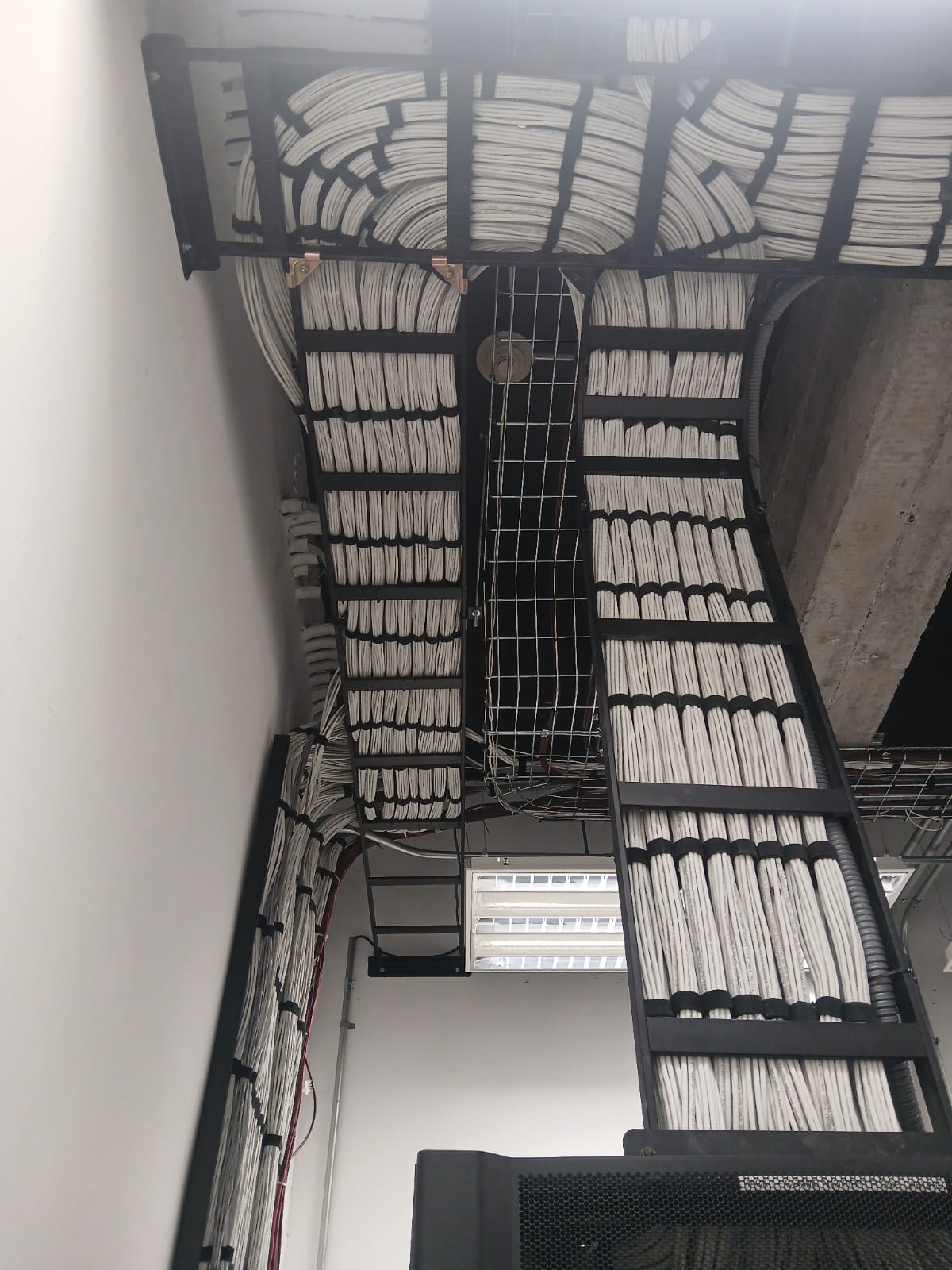
- Structured cabling: supports consistent and reliable connectivity. Explore Camintek’s structured cabling solutions for the physical layer that supports enterprise and industrial network performance.
- Fiber optic cabling: essential where high bandwidth, long-distance communication, or high-performance connectivity is needed.
- Racks, cabinets, and patch panels: improve organization, maintenance, airflow, and physical integrity.
Logical and design components
A robust infrastructure also depends on the logical layer, including network segmentation, topology planning, redundancy and high availability, IP planning, monitoring and management, performance testing, optimization, and validation.
At Camintek, we approach these elements as part of one integrated solution, combining physical and logical infrastructure components through an engineering-driven process. In many environments, network planning also needs to align with related building technologies such as telecommunications systems and audio visual solutions.
Enterprise and Data Center Network Infrastructure
Enterprise and data center environments require networks that can support business-critical services, high data volumes, and demanding performance expectations.
Enterprise network infrastructure
Corporate environments need secure and scalable networks that support office users and collaboration tools, multi-site operations, cloud and internet access, segmented traffic by department or service, secure access for internal users and guests, and reliable communications across business units.
We develop enterprise network infrastructures that support corporate operations with high connectivity, security, and optimal performance. Our solutions are designed to adapt to evolving business needs and long-term growth.
Data center infrastructure
Data centers require a more demanding network foundation. These environments need high-performance connectivity, low-latency communication, strong redundancy and resilience, clean physical and logical organization, support for data-intensive applications, and consistent availability.
Camintek designs robust infrastructures for data-intensive environments where performance, uptime, and scalability are essential. We align engineering, equipment selection, installation, and validation to ensure the infrastructure supports both current requirements and future expansion.
Industrial IT/OT Network Infrastructure
Industrial environments need highly reliable networks that can support automation systems, operational technology, industrial communications, and enterprise integration.
This is one of the areas where a standard office network approach is not enough. In industrial settings, the network often supports communication between equipment, machines, control systems, operational assets, and enterprise platforms. That makes reliability, visibility, and resilience especially important.
At Camintek, we design, install, and support industrial IT/OT infrastructure solutions that enable stable connectivity between operational systems, machines, and enterprise networks. This helps organizations improve efficiency, operational visibility, and resilience across their facilities.
Why industrial infrastructure requires a specialized approach
Industrial environments often require stable and highly reliable connectivity, integration between IT and OT systems, support for automation and industrial communications, secure segmentation between operational and enterprise layers, infrastructure that performs in demanding conditions, and scalability for future modernization.
As IT and OT continue to converge, infrastructure becomes an even more strategic asset. Organizations need networks that not only connect systems, but also support productivity, safety, and long-term digital transformation.
Industries We Serve
Camintek supports organizations across a wide range of sectors, each with different operational and technological requirements.
Industrial
Manufacturing plants, warehouses, and logistics facilities require reliable connectivity for automation, operational systems, communications, and enterprise integration.
Corporate
Headquarters, office buildings, and enterprise campuses need secure and scalable networks that support users, applications, and business continuity.
Commercial
Retail spaces, mixed-use developments, and business centers need network infrastructure that is stable, manageable, and ready to support multiple services and user demands.
Healthcare
Hospitals, clinics, and medical facilities depend on resilient connectivity for operations, communications, and access to critical digital systems.
Education
Universities, schools, and research institutions require robust and scalable networks that support users, learning environments, and institutional operations.
Hospitality and public spaces
Hotels, event venues, and public facilities need infrastructure that balances user experience, wireless performance, and operational support.
Data centers and technology facilities
High-performance environments require carefully designed infrastructure with strong connectivity, reliability, and support for future capacity needs.
Our Network Infrastructure Solution Approach
Our way of working focuses on delivering complete and integrated infrastructure solutions through collaboration, engineering, and performance validation.
Engineering-driven design
We begin by understanding the operational environment, connectivity needs, application requirements, and future growth plans. This allows us to develop infrastructure designs that align with real business and facility demands. That process is strengthened by our experience in engineering and design services.
Integration of physical and logical infrastructure
We combine active and passive components into one cohesive solution, ensuring that physical deployment and logical design support each other.
Supply, installation, and configuration
Our scope covers the full path from equipment selection and supply to installation and configuration. This helps reduce fragmentation and ensures that the final infrastructure performs as intended.
Testing and optimization
We validate architecture, performance, and reliability through testing and optimization, helping clients deploy infrastructure with greater confidence.
Innovation based on real requirements
We apply targeted innovation based on the infrastructure environment and application needs, rather than using one-size-fits-all approaches.
Proven architectures and trusted collaboration
We work in collaboration with leading technology partners and industry experts, using validated architectures with proven performance metrics to support long-term results.
Why Choose Camintek for Network Infrastructure
Choosing the right network infrastructure partner means choosing a team that understands both the technical and operational impact of connectivity.
At Camintek, we bring together engineering and design expertise, supply of active and passive network equipment, installation and configuration capabilities, experience across enterprise, industrial, and data center environments, a strong focus on security, efficiency, and scalability, and support for IT/OT convergence and future-ready infrastructure.
Our goal is not simply to deploy network components. Our goal is to deliver infrastructure solutions that strengthen operations, improve visibility, and support long-term performance across the environments our clients depend on every day.
Build a Secure and Scalable Network Infrastructure with Camintek
Whether you are planning a new facility, expanding an enterprise network, upgrading a data center, or integrating industrial IT/OT environments, Camintek can help you design and implement the right infrastructure for your operation.
Explore our IT Network Infrastructure service and speak with our team about a solution built around security, performance, and future growth.